
Java Brain side effects are an important consideration before adding this cognitive-support supplement to your daily routine. While Java Brain is marketed for focus, memory, and mental clarity, understanding its ingredients, possible risks, caffeine content, and potential interactions can help you make a more informed decision.

What Is Java Brain?
Java Brain is marketed as a cognitive-support supplement designed to be mixed with coffee. The product’s online descriptions position it as a convenient way to add ingredients associated with focus, memory, mental clarity, and general brain health to a person’s existing coffee routine.
The exact presentation and claims can vary across Java Brain websites, so readers should check the current product label before purchasing or using it.
One important distinction is that Java Brain is a dietary supplement, not an FDA-approved medication for treating memory disorders, dementia, ADHD, Alzheimer’s disease, or other medical conditions.
That distinction matters when evaluating claims about safety and effectiveness.
Java Brain Ingredients at a Glance
| Ingredients listed by product information | Why it is included | Safety consideration |
|---|
| Quercetin | Antioxidant and general nutritional support | May interact with some medications |
| Ginkgo biloba | Traditionally used for cognitive support | Can cause headache, dizziness, GI symptoms and may increase bleeding risk with some medicines |
| L-theanine | Often used for relaxation and calm focus | Generally well tolerated, but individual responses vary |
| Chlorogenic acid | Naturally occurring coffee-related compound | Effects depend on dose and overall formulation |
| Camellia sinensis | Green tea-derived ingredient | Caffeine content and individual sensitivity should be considered |
| B-vitamin complex | Nutritional support | Excessive intake of certain vitamins can cause problems |
The product’s published ingredient information identifies these compounds, but consumers should rely on the current Supplement Facts label for exact quantities rather than assuming that every online description reflects the latest formulation.
After reviewing the ingredients and available research, you may want to see the product details for yourself.
Java Brain Side Effects: What Should You Know?
When discussing Java Brain side effects, it is important to separate three things:
Side effects reported or known for individual ingredients
Possible reactions to the complete formula
Personal reactions caused by caffeine, medications, allergies, or underlying health conditions
A product can contain ingredients that are generally well tolerated while still causing problems for a particular person.
For example, Ginkgo biloba is generally tolerated by many adults, but NCCIH notes that possible side effects include dizziness, gastrointestinal symptoms, and headache. It may also interact with medications and increase bleeding risk with anticoagulants such as warfarin.
1. Headache or Dizziness
Headache or dizziness can occur with some herbal supplements, including Ginkgo biloba.
If you notice persistent or significant dizziness after starting a supplement, don’t simply assume that the symptom is part of the adjustment process.
Stop and discuss the reaction with a healthcare professional, particularly if the symptom is severe or occurs with other concerning symptoms.
2. Digestive Discomfort
Some people can experience digestive symptoms when introducing a new supplement.
Possible symptoms may include:
Upset stomach
Nausea
Abdominal discomfort
Changes in bowel habits
This does not necessarily mean Java Brain is unsafe for everyone. It means your individual tolerance may differ from someone else’s.
3. Sleep Problems
Because Java Brain is designed to be used with coffee, caffeine intake deserves special attention.
If you already drink several cups of coffee, adding a supplement to your routine without considering your overall caffeine consumption may make you more likely to experience:
Restlessness
Difficulty falling asleep
Increased alertness at bedtime
Feeling jittery
Temporary nervousness
If you are sensitive to caffeine, using a coffee-based supplement later in the day may be particularly uncomfortable.
4. Feeling Jittery or Overstimulated
Some people tolerate caffeine extremely well, while others are much more sensitive.
If your regular coffee already causes shakiness, racing thoughts, or restlessness, adding a product designed to work alongside coffee may not be the best choice without first discussing it with a healthcare professional.
5. Possible Medication Interactions
This is one of the most important parts of Java Brain safety.
The presence of Ginkgo biloba means medication interactions deserve attention. NCCIH specifically notes an increased bleeding risk when Ginkgo biloba is taken with warfarin.
Do not assume that a supplement is harmless simply because it is sold without a prescription.
If you take prescription or over-the-counter medication regularly, ask your doctor or pharmacist to check the full ingredient list before use.
Java Brain Side Effects vs. Normal Caffeine Effects
Sometimes people blame a supplement for a reaction that may actually be related to the coffee consumed with it.
Symptom | Possible consideration |
Jitters | Caffeine sensitivity |
Trouble sleeping | Caffeine consumed too late |
Headache | Caffeine changes or individual ingredient response |
Upset stomach | Coffee, supplement ingredients, or both |
Increased alertness | Expected caffeine effect |
Dizziness | Possible ingredient or individual reaction |
Racing heartbeat | Caffeine sensitivity or another issue requiring attention |
This is why it can be useful to look at the whole routine, not only the supplement.
Who Should Be More Careful With Java Brain?
Not everyone should begin a new supplement without professional guidance.
Consider speaking with a healthcare professional before using Java Brain if you:
Take prescription medications
Take blood-thinning medication
Are pregnant or breastfeeding
Have a diagnosed medical condition
Have a history of strong reactions to caffeine
Take multiple supplements
Have experienced unexplained dizziness or headaches
Are preparing for surgery
Are unsure about the ingredients on the current label
Is Java Brain FDA Approved?
This question is important because some online supplement pages use phrases such as “FDA approved” or “FDA-approved facility.”
Those statements should not be confused with FDA approval of the finished dietary supplement.
The FDA states clearly that it does not approve dietary supplements for safety and effectiveness before they are marketed. Manufacturers are responsible for ensuring that their products comply with applicable requirements, while the FDA has enforcement and monitoring responsibilities.
Therefore:
Do not interpret “FDA-registered facility,” “GMP facility,” or similar manufacturing statements as meaning that the Java Brain supplement itself has been FDA-approved for safety or effectiveness.
This is an important distinction for any supplement buyer.
What Does the Research Say About Java Brain Ingredients?
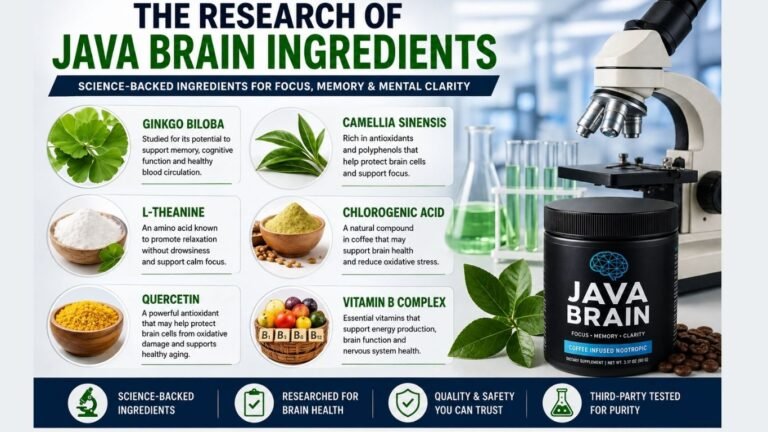
The ingredients deserve to be considered individually rather than assuming that research on an ingredient proves that the complete Java Brain formula will produce the same result.
For example, NCCIH says evidence for Ginkgo’s effects on cognitive performance in healthy people is uncertain, while its safety profile and potential medication interactions are better established.
That means it would be misleading to say:
“Ginkgo has been studied, therefore Java Brain is clinically proven to improve memory.”
Those are two different claims.
A more responsible interpretation is:
“Java Brain contains ingredients that have been studied individually, but research on individual ingredients does not automatically establish the effectiveness or safety of the finished product at its specific formulation and dosage.”
This distinction is especially important when evaluating nootropics and other cognitive supplements.
How to Use Java Brain More Responsibly
If you decide to try Java Brain after reviewing the label and considering your personal circumstances, a cautious approach makes sense.
Tip 1: Start With the Label
Use the current serving instructions supplied with the product.
Do not increase the serving because you want faster results.
More is not automatically better.
Tip 2: Consider Your Total Caffeine Intake
If Java Brain is used with coffee, remember that the coffee itself contributes caffeine.
Keep your total daily caffeine consumption in mind rather than looking only at the supplement.
Tip 3: Avoid Unnecessary Supplement Stacking
Do not combine several products marketed for memory, focus, energy, or nootropic effects without checking their ingredient lists.
You could unintentionally duplicate ingredients or stimulants.
Tip 4: Monitor Your Response
Pay attention to how you feel during the first several uses.
Record symptoms such as:
- Headache
- Dizziness
- Stomach discomfort
- Sleep changes
- Jitters
- Unusual reactions
If a concerning symptom develops, discontinue use and seek appropriate medical advice.
Tip 5: Buy From a Reliable Source
Counterfeit or improperly stored supplements can create additional risks.
Check the packaging, expiration date, Supplement Facts panel, serving instructions, and seller information.
Common Mistakes People Make With Java Brain
Mistake 1: Assuming Natural Means Safe
Natural ingredients can still have side effects and drug interactions.
Ginkgo is a good example. It is plant-derived, but NCCIH identifies potential bleeding and medication-interaction concerns.
Mistake 2: Taking More Than Recommended
Increasing the amount does not guarantee better focus or memory.
It can instead increase exposure to active ingredients.
Mistake 3: Ignoring Coffee Intake
If you already consume significant amounts of coffee or other caffeinated drinks, adding another coffee-based product without considering the total may lead to unwanted effects.
Mistake 4: Ignoring Medications
This is one of the biggest safety mistakes.
Always consider potential interactions before adding an herbal supplement to your routine.
Mistake 5: Treating Marketing Claims as Medical Evidence
Statements such as “clinically proven,” “FDA approved,” or “works for everyone” deserve careful scrutiny.
The FDA specifically explains that dietary supplements are not FDA-approved for safety and effectiveness before marketing.
Java Brain Safety: Pros and Cons
Potential Advantages | Potential Concerns |
Convenient coffee-based format | Individual reactions can vary |
Contains several researched ingredients | Exact ingredient amounts should be checked on the current label |
May fit easily into a morning routine | Caffeine intake should be considered |
Some ingredients have established safety information | Ginkgo can interact with certain medications |
Easy to add to an existing beverage | “Natural” does not mean risk-free |
Product information is available online | Marketing claims should not be treated as medical proof |
When Should You Stop Using Java Brain?
Stop using the product and seek medical advice if you experience a significant or unusual reaction.
Seek urgent medical attention for severe symptoms such as:
- Difficulty breathing
- Swelling of the face, lips, tongue, or throat
- Fainting
- Severe chest discomfort
- Severe or unusual bleeding
- Sudden neurological symptoms
- A serious allergic reaction
These symptoms should not be dismissed as an ordinary supplement adjustment.
Expert Advice: How to Think About Java Brain Safety
A useful way to evaluate Java Brain side effects is to use the same basic framework you would use for any dietary supplement:
- What exactly is in it?
Read the current Supplement Facts label. - How much is in each serving?
Ingredient quantity matters. - What else am I taking?
Consider prescription drugs, over-the-counter medicines, vitamins, and other supplements. - How much caffeine do I consume?
Coffee and other caffeinated products can change how you feel. - Do I have a reason to avoid certain ingredients?
Pregnancy, breastfeeding, surgery, medical conditions, and medication use may require additional caution. - What evidence supports the claims?
Separate evidence about individual ingredients from evidence about the finished product.
This approach is more useful than simply asking whether a supplement is “safe” or “unsafe.”
FAQ
1. Does Java Brain have side effects?
Java Brain side effects are possible, although individual reactions can vary. Ingredients listed in product information may have their own potential adverse effects. For example, Ginkgo biloba can cause headache, dizziness, and gastrointestinal symptoms in some people.
2. Is Java Brain safe for everyone?
No supplement should automatically be considered safe for everyone. People taking medications, pregnant or breastfeeding individuals, and those with medical conditions should speak with a healthcare professional before use.
3. Can Java Brain cause headaches?
Headaches can occur with some supplement ingredients, including Ginkgo biloba. Caffeine changes can also cause headaches in some people. If headaches persist or are severe, stop using the product and seek medical advice.
4. Can Java Brain cause dizziness?
Dizziness is a possible side effect associated with Ginkgo biloba. If dizziness occurs after taking Java Brain, especially if it is severe or persistent, discuss it with a healthcare professional.
5. Can I take Java Brain with medication?
Do not assume that Java Brain can be combined safely with every medication. Ginkgo biloba can interact with medicines, including warfarin, and may increase bleeding risk. Ask your doctor or pharmacist to review the ingredients against your medications.
6. Can Java Brain affect sleep?
Because Java Brain is intended to be mixed with coffee, caffeine intake may affect sleep, particularly when consumed later in the day or by people who are caffeine-sensitive.
7. Is Java Brain FDA approved?
The FDA does not approve dietary supplements for safety and effectiveness before they are marketed. Therefore, claims about an FDA-approved supplement should be interpreted carefully.
8. Is Ginkgo biloba in Java Brain safe?
Ginkgo leaf extract is generally well tolerated by many adults, but it can cause side effects and interact with medications. NCCIH specifically notes potential bleeding concerns with warfarin and possible side effects such as dizziness, headache, and gastrointestinal symptoms.
9. Can I take Java Brain with other supplements?
Be careful when combining multiple supplements. You may duplicate ingredients or increase your total caffeine or other active compounds. Compare the Supplement Facts panels before combining products.
10. Should I use Java Brain if I am pregnant?
Pregnant individuals should speak with a healthcare professional before taking Java Brain. NCCIH notes that Ginkgo may be unsafe during pregnancy and that information about breastfeeding safety is limited.
11. What should I do if I experience Java Brain side effects?
Stop taking the product if you develop a concerning reaction and contact a healthcare professional. Severe symptoms such as difficulty breathing, fainting, serious allergic reactions, or unusual bleeding require urgent medical attention.
12. Where can I learn more before buying Java Brain?
For a broader evaluation, including the product’s ingredients, claimed benefits, how it works, pros and cons, and purchasing considerations, read our complete Java Brain review.
👉 Read our complete Java Brain Review to explore its benefits, how it works, possible side effects, pricing, and whether Java Brain may be worth considering for your goals.